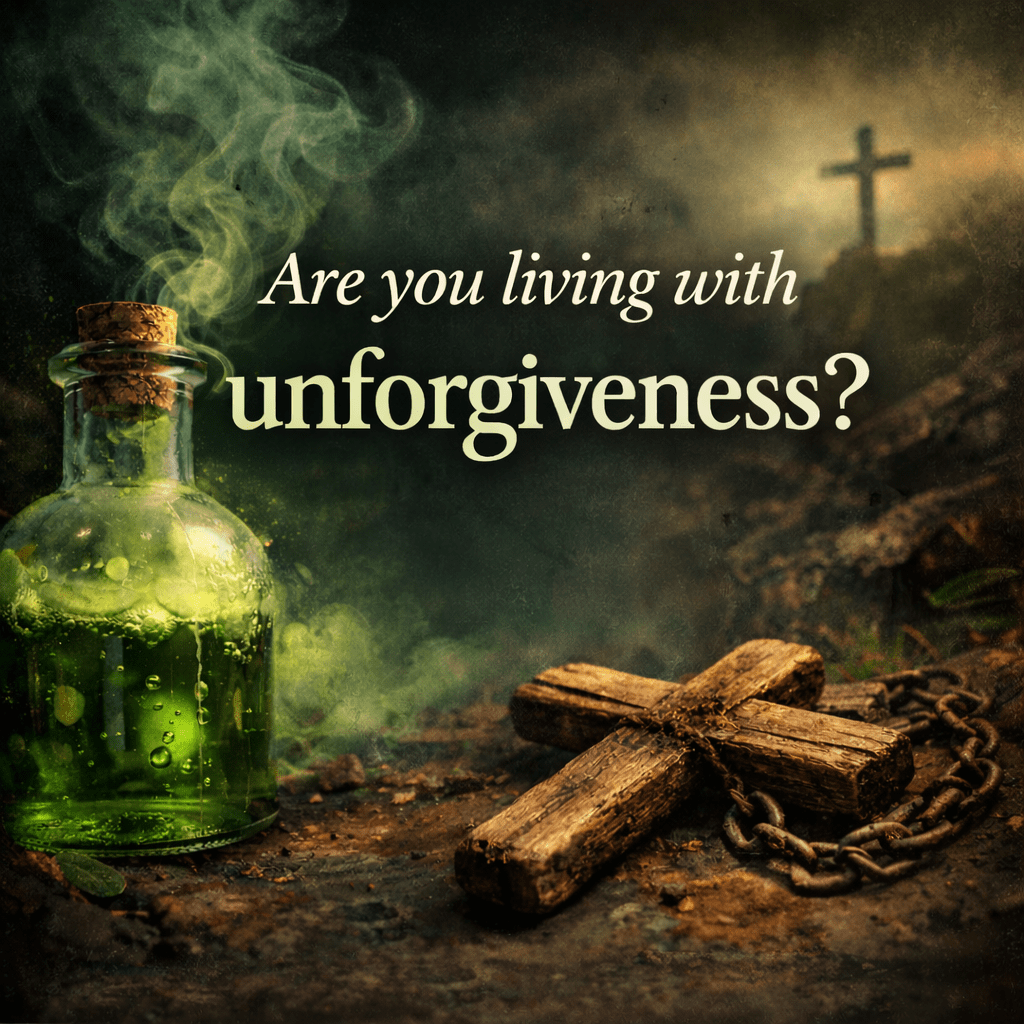
Question – Do you have a problem with unforgiveness?
(This is a 3 part series)
Recently I was involved in a conversation about how to deal with a person who had done some things that had hurt myself and some other family members. As this person is still in our life, we were discussing how or if we need to engage with them as they have not sought reconciliation.
By the end of the chat, it was clear to me that not only had I not yet forgiven this person, but I was also angry with someone else connected to the pain, and bitterness was now living rent free in my head and heart. I had thought that I had delt with the first person, and whenever the second person was mentioned in the past, I would discard any thoughts about them without ever dealing with what actually happened.
What makes my experience even more challenging, is that the people who hurt us have never spoke of their poor behaviour, and act as if nothing ever happened. I want to acknowledge that this type of experience is common and makes it more difficult for people for forgive.
Deliberate and hidden unforgiveness
I believe there are two types of unforgiveness that the body of Christ lives with, and while none of what I am about to share with you is new, it is extremely important that you continue to read, so the poison of unforgiveness is dealt with.
Deliberate unforgiveness is when the pain feels so deep, the thought of forgiving the person or what they did to us just makes us angry even more. The unforgiveness is obvious, and all the reasons to not forgive make sense to the hurting person. Their thinking could be “I have every right to be angry, the pain is real and the person who hurt me does not deserve my forgiveness.
On the other hand, hidden unforgiveness is in the background and the person thinks that they have forgiven but has not dealt with any of the pain. On the surface it appears that all is well but underneath it is far from it. This unforgiveness is not obvious, and their thinking could be “I have forgiven that person and I am fine”. Others around you will even think that you have forgiven the other person.
Can you identify which category you belong to?
As I have reflected on these two types of unforgiveness, I can see that it has been the hidden type that has caused me the most grief over the years. I would think that I am fine because at some point I said the words “I forgive them”, then the person who hurt me would come up in a conversation and it wasn’t long before I would explode in anger or bitterness.
My hope is that if you are reading this and already have a problem with unforgiveness or have now identified that you do, that you would be willing do everything you can to be free from this prison.
The poison of unforgiveness.
It’s easy to talk about unforgiveness and fail to get the to heart of the matter, which means we are no better off than when we started. So, it’s important that we address the physical and spiritual consequences of unforgiveness, so we don’t deceive ourselves thinking it’s ok to not forgive others.
In the physical realm, it’s not just unforgiveness that we have chosen to live with, we also allow resentment, bitterness and anger to move in as well. These three things will always be hiding in the shadows, waiting for their opportunity to erupt like a volcano. No wonder Paul commands that we get rid of all bitterness and anger in the book of Ephesians.
The spiritual side of unforgiveness is something that shouldn’t be ignored. The most serious spiritual consequence for choosing not to forgive someone is clearly stated in Matthew 6:14-15 when Jesus said “If you forgive others their trespasses, your heavenly father will also forgive you. But if you do not forgive others, neither will your father forgive you”. While the damage of holding on to unforgiveness may not always be obvious, it’s important to know that the consequences are unavoidable and the longer the poison is not dealt with, the worse it will be for you.
Is the poison of unforgiveness present in your life?
Leave a comment if you have experience with unforgiveness and please consider subscribing to the blog so you can be notified of part two of this series.

I find it interesting that Scripture uses the phrase “root of bitterness.” I wonder if sometimes we only cut off the visible part of our unforgiving attitude, like mowing down weeds instead of pulling them up by the roots. It may be that only God can uproot our offenses thoroughly, and we need to turn to Him for help, since He is the authority on forgiveness.
LikeLiked by 1 person
G’day Ann, thanks for your comment.
I think you are spot on about how we often only deal with the visible part of this problem, and will be posting more about this issue, including how much we need to go to God for help with the inner work.
Its a serious problem in the church and i reckon its not addressed enough.
LikeLike
Hidden Unforgiveness- I could so understand that. It takes more work within our hearts to completely forgive someone especially if they do not seem to acknowledge anything on their end. And holding onto Unforgiveness is not just that but also resentment, anger and bitterness- so very true. I learnt that forgiveness is more between us and God. To be able to let go. Whereas reconciliation is a different matter.
LikeLiked by 1 person